Dr. Martens for sustainable brand spaces


ARNO x Dr. Martens: Iconic Style, Lasting Impact
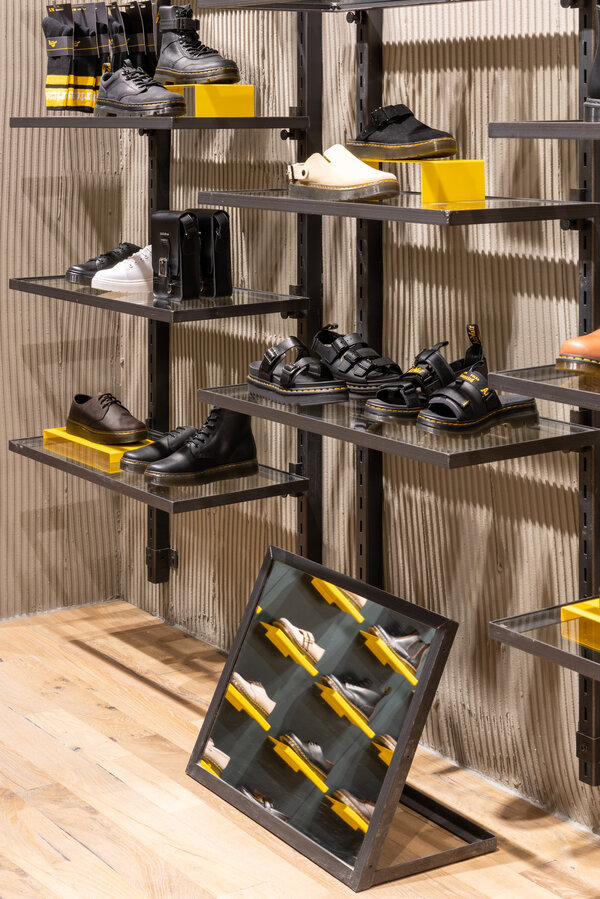
Dr. Martens is a global footwear brand with a strong cultural identity and a growing focus on sustainability. In collaboration with ARNO, a range of shop-in-shop systems, VM props, full store fixtures and a mock shop were developed with an emphasis on material efficiency, energy use and lifecycle considerations. The objective was to translate the brand’s identity into retail environments while reducing environmental impact.
Sustainability at the Core of Design
ARNO conducted a structured sustainability analysis of Dr. Martens’ retail furniture. This included an assessment of material selection, manufacturing processes, transport, energy use during the product lifecycle and end-of-life scenarios.
The evaluation was based on life cycle assessment (LCA) principles and standardised carbon accounting approaches commonly used in retail and furniture production.
As a result of design optimisation, material substitution and value engineering, the project achieved measurable improvements across environmental and economic indicators. In parallel, the supply chain was reviewed and adjusted to reduce transport volumes and improve efficiency.
Economic and environmental benefits of sustanable retail design
Sustainable retail design leads to tangible benefits such as:
- Reduction of CO₂ emissions: approx. 25% lower emissions through optimised materials, constructions and transport volumes
- Reduction of distribution volume: approx. 25% decrease achieved through more efficient design and packaging
- Lower furniture costs: approx. 13% cost savings resulting from value engineering and structural simplification
- Improved resource efficiency: targeted use of durable and more sustainable materials
- Facilitated end-of-life management: consideration of reuse and recycling already in the design phase
From Vision to Implementation across Europe
Based on the defined design and sustainability parameters, ARNO engineered and produced the retail fixtures and managed their implementation across multiple European markets, including the UK, Spain, France, Germany, Italy, Sweden, Belgium and Denmark.
The consistent application of the developed standards ensured comparable environmental and functional performance across all installations.
- About
- Facts
- News
- Showcases
- Newsletter
- Imprint
- Privacy Policy
- Accessibility
- Supplier information
- Germany
- Great Britain
- Turkey
- China
- USA


